
Famous Irish and International People with Dyslexia
When a child is finding reading hard, stories of people who have thrived can be a real comfort. According to Dyslexia Ireland, around one in ten people in Ireland has some form of dyslexia, and it affects people from every walk of life. It has nothing to do with intelligence.
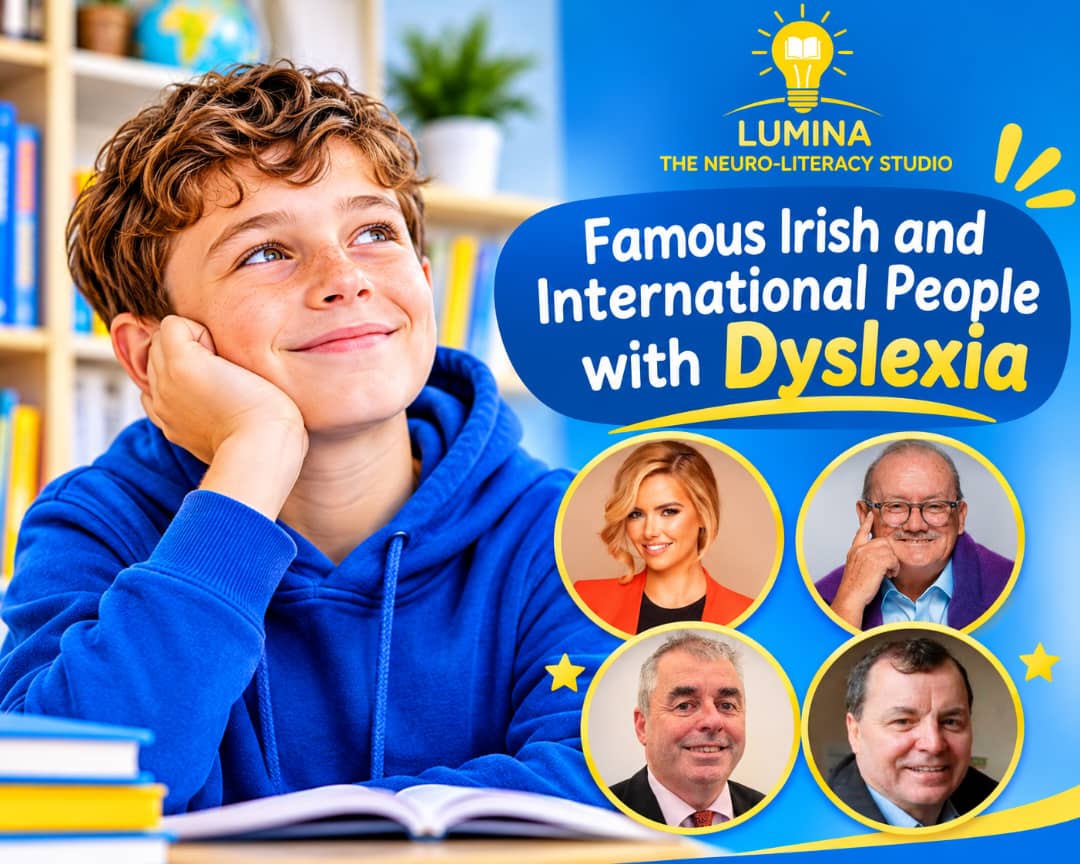
Irish people
Brendan O'Carroll: comedian and creator of Mrs Brown's Boys Brendan has dyslexia, as do his sons. He left school at 12, yet he is a member of Mensa, the society for people with a high IQ. His story is a powerful reminder that difficulty with reading says nothing about how clever someone is.
Don Mullan: writer Don, best known for his book Eyewitness Bloody Sunday, was diagnosed with dyslexia at 38. He later wrote an essay about the experience for a Dyslexia Association of Ireland book for adults with dyslexia, published in 2009. He has spoken about how much teachers and role models can matter, and about the value of determination.
Charlie Bird: journalist and broadcaster Charlie spoke publicly about his struggles with dyslexia and how he overcame them, including in a 2018 radio interview on Today FM.
Kevin 'Boxer' Moran: TD In an Irish Times interview in September 2026, Kevin 'Boxer' Moran spoke candidly about his dyslexia. He recalled waiting six months to make his maiden speech in his first Dáil term, and said parents, schools and adults regularly contact him about dyslexia.
Dr Ivanna McMahon: doctor and Dyslexia Ireland ambassador Ivanna, who was crowned Miss Ireland, is a doctor and an ambassador for Dyslexia Ireland. She visits schools to talk to students about dyslexia acceptance and self-esteem.
A note on accuracy: Lists online often include people who never said they were dyslexic, or whose dyslexia is only guesswork. Albert Einstein is a common example, and his dyslexia is disputed.
This post includes only people who have spoken publicly about their own dyslexia, or whose dyslexia is documented by reliable sources. It also matters that a dyslexic child does not need to become famous to be doing brilliantly. These stories are here for encouragement, not as a measuring stick.
International
Steven Spielberg: film director Spielberg was diagnosed around the age of 60 and spoke publicly about it in a 2012 interview. He has said he learned to read later than his classmates and was bullied at school. Making films became his outlet, and he described the diagnosis as the missing piece of a long mystery.
Richard Branson: entrepreneur Branson has said that being dyslexic can help in the outside world, because he sees some things more clearly than other people do.
Keira Knightley: actor Knightley has said that dyslexia does not mean you are stupid. It simply means you work in a different way.
Jamie Oliver: chef Jamie has said that he never really had anyone who understood dyslexia and could bring out his strengths. It is a good reminder of how much understanding teachers and family can make a difference.
Jennifer Aniston: actor Aniston has talked about her struggles with dyslexia, including believing as a child that she was not smart because she could not retain things.
Benjamin Zephaniah: the late poet Benjamin Zephaniah learned at 21, in an adult education class in London, that he was dyslexic. He said it was a relief, because he had thought he was going crazy. His story shows that it is never too late to learn and to be understood.
Formula One Lewis Hamilton, the F1 world champion, has spoken about school not being a happy place for him. Sir Jackie Stewart, another F1 champion, has served as President of Dyslexia Scotland.
Steven Naismith: footballer The Scottish footballer has said that although he was good at football, spelling tests were a struggle.
What these stories have in common
• Diagnosis can come at any age. Don Mullan was diagnosed at 38, Spielberg at around 60 and Zephaniah learned at 21. If your child is identified early, they already have a head start.
• School can be tough. Several people describe feeling unintelligent or unhappy at school, which is why confidence matters so much.
• Understanding makes the difference. Teachers, role models and support helped, and so did finding things they were good at.
• Dyslexia is not a superpower. It does not guarantee special talents, and many dyslexic people need real support. These stories show it is possible to thrive, not that it is easy.
Talking to your child about it
• Share stories connected to your child's interests, such as sport, film, cooking, music or comedy.
• Listen to the life stories of people with dyslexia together. Your local library may have audiobooks you can borrow free through BorrowBox.
• Praise effort, persistence and strengths, not just reading scores.
• Remind your child that how well someone reads has nothing to do with how smart they are.
Need support for your child ?
At Lumina Neuro-Literacy Studio, we help children build reading skills and confidence with structured literacy tutoring. We offer a free consultation to talk through your child's needs. Book a consultation.
Ready to take the next step?
Every learner deserves the right support.
Book a free consultation with Lumina to discuss your child's needs and find the right path forward.
Book a consultationKeep Reading